

Lumelang,
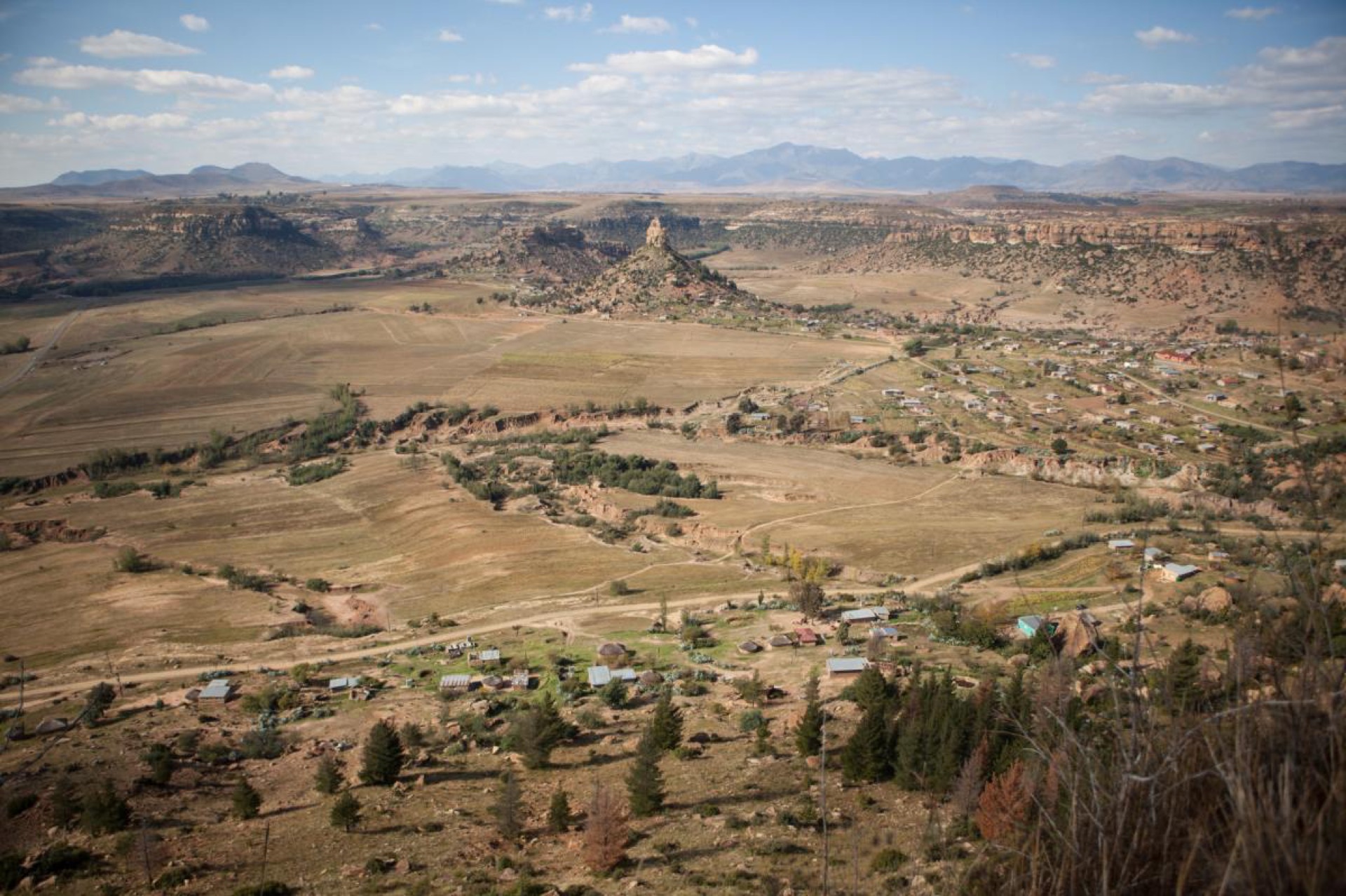
We are back in touch from Lesotho, which for a change is cold and cloudy. We have now been here for a month and already feel really at home. We have started the projects we had in mind as planned, but quite a few more have been added.
You can find detailed information about the projects under the Projects section.
First of all, we would like to tell you about our impressions of the country and its people. We got used to life and the way of life here surprisingly quickly. The Basotho (the people of Lesotho) make it easy, though, as they are such a warm and contented people, very proud of their still young nation and their culture.
You sometimes almost forget that you are in one of the poorest countries in the world, struggling with so many hardships such as HIV and unemployment. It is very fulfilling when you can make life a little nicer, at least in a very small way, especially for the children – for example by giving them the chance to do sport and so inspiring them in a certain way. And yet you are reminded again and again that you cannot save the whole country.
It is often hard to bear that living conditions here are very difficult. A good example is that hardly any family here has running water, so no one can afford to wear long hair. Almost all the women here have wigs, small braided hairstyles or wear their hair cropped short. It is astonishing that you cannot tell from the people in the street that their home is usually just a simple hut. No child owns a set of sports clothes or a pair of football boots to wear to our training sessions either. The school uniforms are often worn out too, even though the parents take great pains – the boys’ trousers, for example, always have a perfect crease. Despite all this, people here face life with great acceptance and invest a lot in their children’s education.
The children here in particular are so incredibly heart-warming. A few examples:
When Clara and I walk from our flat to the school grounds in the morning, voices ring out from all directions: “Morning teacher”, “Hello Miss Clara and Miss Hannah”, and the younger pupils in particular run up to us with beaming faces to high-five or hug us.
We also had some very special moments on Valentine’s Day. A day that in Germany is associated mostly with couples or people in love is a general celebration of love here. So it happened that the children in our classes gave us sugar-sweet letters and little home-made presents. The letters contained the sentence “I love you teacher” about 100 times, but also words of thanks for our work. That strengthened our belief that our stay here is worthwhile.
It is also great when you simply meet a pupil in the school yard who tries to greet you or say goodbye in German – even though you have only taught the German club twice.
Now we would like to tell you about our projects.
Girls’ football team
For this and for the sports club we went to the capital, Maseru, twice this week to buy sports equipment. That was a very funny outing. We had been promised that we would go to the biggest sports shop in the country. When we walked in, it turned out to be a large kiosk with 3 m² of sales space. You would hardly believe it, but in that shop we were able to get or order everything we needed: footballs, bibs, cones, skipping ropes, relay batons and even an agility ladder. We also treated ourselves to two whistles to spare our voices a bit.
We were able to finance all of this through donations we had raised in advance – partly from a muffin sale at Kolleg St. Sebastian and partly from the prize money of the “Young Women in Public Affairs Award” of the organisation Zonta, which I (Hannah Wehrle) won. This makes it a great deal easier for us to teach and train this large number of pupils better and in more varied ways. And it was wonderful to see how the children reacted.
Today, however, our euphoria was slightly dampened.
The situation:
We have training on the football pitch every Saturday from 9 o’clock. When we stood on the pitch today, loaded with the new equipment, not a single girl turned up. The only explanation we could think of was that the children thought the weather was too bad. Yes, it had rained during the night and it was noticeably chilly by Lesotho standards (13 degrees).
We waited a few minutes, and just as we had almost given up hope, the girls trickled in one after another, up to an hour late, so that in the end there were ten girls. The sheepish excuse was that everyone had thought nobody would train in such weather. For us hardy Black Forest girls, though, this was perfect football weather. But when it started to rain again, we decided to move the training, with not even half the players, into an old assembly building. There we were able to do a few exercises surprisingly well and so rescue the slightly unsuccessful football morning.
Our “sports hall”
Our girls, very happy with the new sports equipment.
Library
“Reading is the key to the world,” they say. Almost all of us still remember children’s books we read and never forgot. It becomes difficult when you teach pupils who live in such a poor country, where children’s rooms are not full of books. That is why a few years ago a Peace Corps volunteer from the USA rebuilt the school library. In the meantime, however, the project has fizzled out again, as the teachers simply do not have time to look after the library. When we found the library dusty and very chaotic, we had the idea of bringing it back to life. On top of that, 18 boxes of 100 donated books each were already waiting that nobody had unpacked yet. The books come from all over America and were mostly donated by university libraries and private individuals. The range of books is astonishing: from children’s picture books and thrillers to highly complicated encyclopaedias and school textbooks. We are now restructuring the library and replacing old material with new.
Our goal is for the children to be able to borrow books, so that they have the chance to read as much as they want and thus make a good contribution to their education.
We would like to open the library next week.
We have put together some other interesting stories from the Kingdom in the Sky for you here:
Shared taxis
If you want to go from Mafeteng to another town such as Maseru, the most common and also cheapest option is to take a minibus taxi. That means a completely battered VW or some other 12-seater bus, which is happy to tear along the country’s roads with 17 people on board. You can hardly plan how long a journey will take, as it stops at every conceivable point to let people on or off, or simply tries to persuade passers-by to come along. Inside the bus the air is hot and stuffy, and to make yourself heard over the loud music people simply talk and argue even more loudly. Everything and everyone that somehow fits is loaded in, and the seat belt is more a fashion accessory of the bus than something to be used. Very uncoolly, we used ours anyway. Despite all this, the taxis get you to your destination “safely”.
At Setsoto Stadium
As you can see in our gallery, we have also been to Setsoto Stadium in Maseru. That was a very special experience. The match was an African Champions League game between the best team in Lesotho, Bantu FC from Mafeteng, and Mbabane Swallows from Swaziland. Unfortunately Bantu FC lost, but that was no reason for the Bantu fans and the whole of Mafeteng not to hold a huge football party in yellow and black both before and after the match. The match itself was different from a European game. It was much wilder and less controlled, but the fans and players were at least as emotional. Everything was not half as commercial as at home; you are allowed to bring your own food and drink, which is why you could see families heaving large cool boxes up the stands. At half-time two BMX riders showed off a few tricks, and before the match there was a completely different, unplanned show when a streaker raced across the pitch.
Life as the odd ones out
How do two white girls like us get on in the streets of Lesotho? You need to know that, unlike South Africa, Lesotho does not have a large white population. In plain English, that means there are currently no white people in Mafeteng apart from us. In everyday life this means that people stare at you, or smaller children touch you quite unashamedly, and now and then someone calls out “lekhooa”, which means “white person”. But it also means that complete strangers remember you, greet you warmly and react with a big smile when you greet them in Sesotho or can say a few more words. The supermarket cashiers, for example, remember us and like to chat with us. In general, many people are interested in where we live, what we do, how long we are staying and where we come from. Once or twice mothers have even been so taken with us that they wanted to marry us to their sons. At first you feel like you stick out like a sore thumb, but that gets better with time. The funny thing is that we now always react slightly shocked when we see a light-skinned person, in Maseru for example.
We will be in touch again when something exciting happens
Sala hantle (goodbye)
Clara and Hannah