

On 1 November I moved into a bigger room with its own shower at the CTC…
I now live in the same building as the sisters and staff of the Catholic Training Centre, which I like much better, as for the last few days I had been sleeping alone in the guest-room house, which felt a bit strange… Anyway, the nuns and other staff are incredibly nice and there is always something going on. Even if I should ever get bored – which has not happened yet – there is almost always someone around I can talk to or help in the garden, for example… After dinner I usually watch TV with some of the sisters and the CTC staff, laugh, chat and try to learn a few words of Sesotho every evening if I can.
Every Thursday I sit in on the Grade 4 maths lesson. (I will post my timetable online separately.) So too on 2 November… But this sunny, beautiful morning – already too warm at 8 am (25 degrees) – was no ordinary Thursday morning. I could feel the tension, the calm before the storm, as if thunderclouds were already gathering on the horizon. The excitement before the Grade 4 final exams in maths and Sesotho, written in two streams and four rooms on the same day, could be felt across the whole school grounds. Pupils ran across the yard with the same desperate look I still knew only too well from my own days as a full-time pupil before many a test – at least during those times when the “full-time” had been forgotten in the depths of my subconscious, in front of the flickering screen of my old TV or at the bottom of a glass or two of a seductively golden juice. Although this last way of escaping reality plays no role whatsoever for primary school pupils – it was more likely one of the countless soaps or their friends that kept them from working out areas, basic arithmetic and word problems. I would like to add, however, that in my experience most of the pupils here are much more determined and eager to learn at such a young age than most Western primary school pupils. You can tell that they are aware of what education means for their future lives.
And now I – whose twelve years of experience in “inconspicuously” manipulating the outcome of many a test were still fresh in my memory – was allowed to supervise the exam. (Note to my former teachers, should they happen to read this: please replace “I” in the last few sentences with any other name.)
In any case, I was now sitting in front of 25 pupils who looked at me like innocent lambs. Every now and then two pupils would suddenly duck down at the same time after happening to drop their pens and try to glean information from their neighbour. They were quite astonished to discover that, although I may not understand Sesotho, I can hear when Sesotho is being whispered under the desks.
Apart from a few attempts at whispering, though, it stayed quiet and most of them worked with concentration.
That same evening I was busy marking the papers, which I do not mind at all, as it is a good way to wind down.
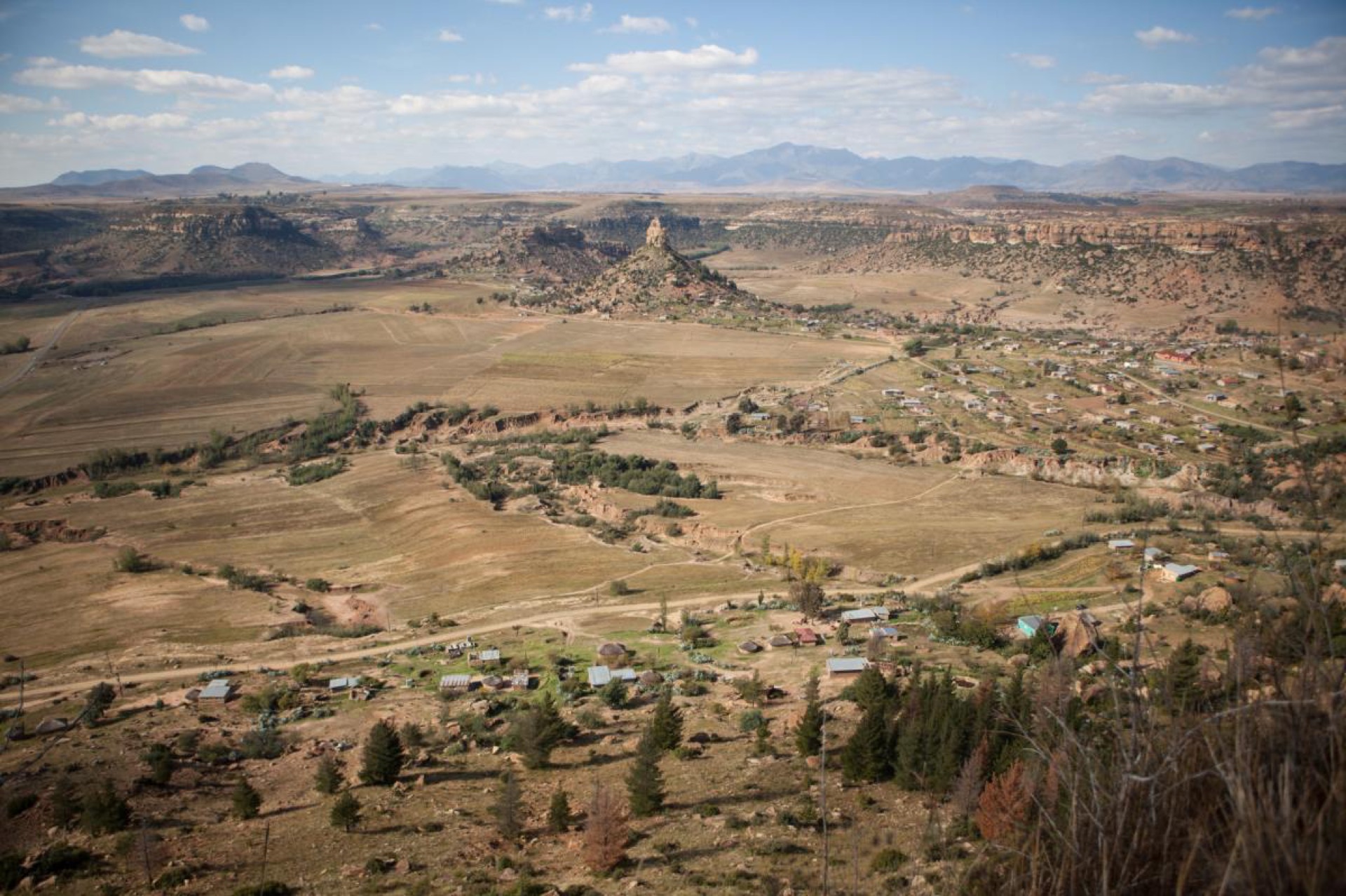
On Saturday I met Thabiso and Antonia to walk/climb up one of Mafeteng’s local mountains, and afterwards I went with Thabiso and Thabelo to the sports ground to watch the basketball tournament and try out tennis and skateboarding, which went much better than I had expected.
At 11 o’clock on Sunday Anna arrived from Morija in one of the minibus taxis, which handle practically all public transport, and we spent the day wandering around Mafeteng.
Monday was the day after the big rain, which lasted from Saturday evening until half past nine on Sunday morning. It really poured down, and my host mother was right: when it rains in Lesotho because of thunderstorms, it really rains – the thunderstorms here are pretty serious too.
And after the first heavy rains of summer (the rainy season), last week was noticeably cooler and more pleasant.
At 25 degrees in the shade at midday, I find long trousers and a sweatshirt a bit too warm during the day. But the Basotho I am in contact with – pupils, teachers, sisters and CTC staff alike – see things a little differently. So at the moment, besides the standard questions about what I am doing today and how I am, it has become a ritual to ask whether I am not cold when I go around in shorts and a T-shirt. In general the Basotho seem to feel the cold differently from me. Even at well over 30 degrees some of them still wear thick “between-season jackets”, and it is a kind of mortal sin to open the windows in taxis or any other vehicle, because someone might get cold. And air conditioning apparently is not used anywhere in the country, no matter how stuffy, warm or humid it is.
Now that the ground is finally getting moist – thanks to the rain of the last few days – I started the “gardening project” with Grade 6 on Wednesday 9 November, in agreement with Mateboho Masiu.
I was thrilled that well over half of the grade took part voluntarily. On Wednesday and Thursday the pupils divided themselves into groups of four to seven, depending on the size of the plots. The pupils and I are supported in our work by Sir Sello, Sir Soko and… who bring a bit of order to the anthill of pupils.
On Thursday we started digging over the soil, and from next week we want to start sowing. I want to give each group the chance to grow what they like. They should be able to choose from various plants such as green beans, peas, beetroot, spinach, carrots, lettuce, cabbage and so on. From now on the individual groups are also responsible for looking after their own plots.
After only an hour in the garden, however, we had to stop because of an approaching thunderstorm – which turned out to be almost impossible, as even in pouring rain with lightning flashing across the sky the children did not want to go home.
The next day we continued our work, and almost all groups have now prepared their plots far enough to start planting. After I started with class B on Wednesday, the volunteers from class A have now joined too, and the gardening project now has no fewer than 98 participating pupils from just one grade, spread over 22 plots.
At first we had planned to offer the gardening project to Grades 4 to 6, but we have since dropped that idea, as we lack the time and capacity to look after 300 pupils at once and give them the support that, in my opinion, they deserve in a project like this.
By now I am also really grateful that several teachers are helping me make this project possible, which would hardly have been possible for one person with such a large group.
On Monday the big digging begins. We will start by sowing the first seeds and planting the first seedlings. Each group is responsible for bringing seeds etc. from home. In return, though, they have complete freedom over what they want/are allowed/are able to plant. They also have to bring their own garden tools from home. At first Mateboho Masiu and I had considered providing the seeds etc. for the groups, but we had been expecting only a fraction of the participants. Providing tools, seedlings, seeds and so on would have gone far beyond what was possible. Quite apart from the limited funds, the overall effort would simply have been too great. As almost every family in Lesotho – including those at Kingsgate Primary School – practises subsistence farming and grows food for their own needs, either on rented land or more often in their own garden, it is not a big problem for the pupils to bring the things they need from home.
Even in the short time since we started working, I can see the children helping each other and learning from one another.
I will report more about the gardening project here.